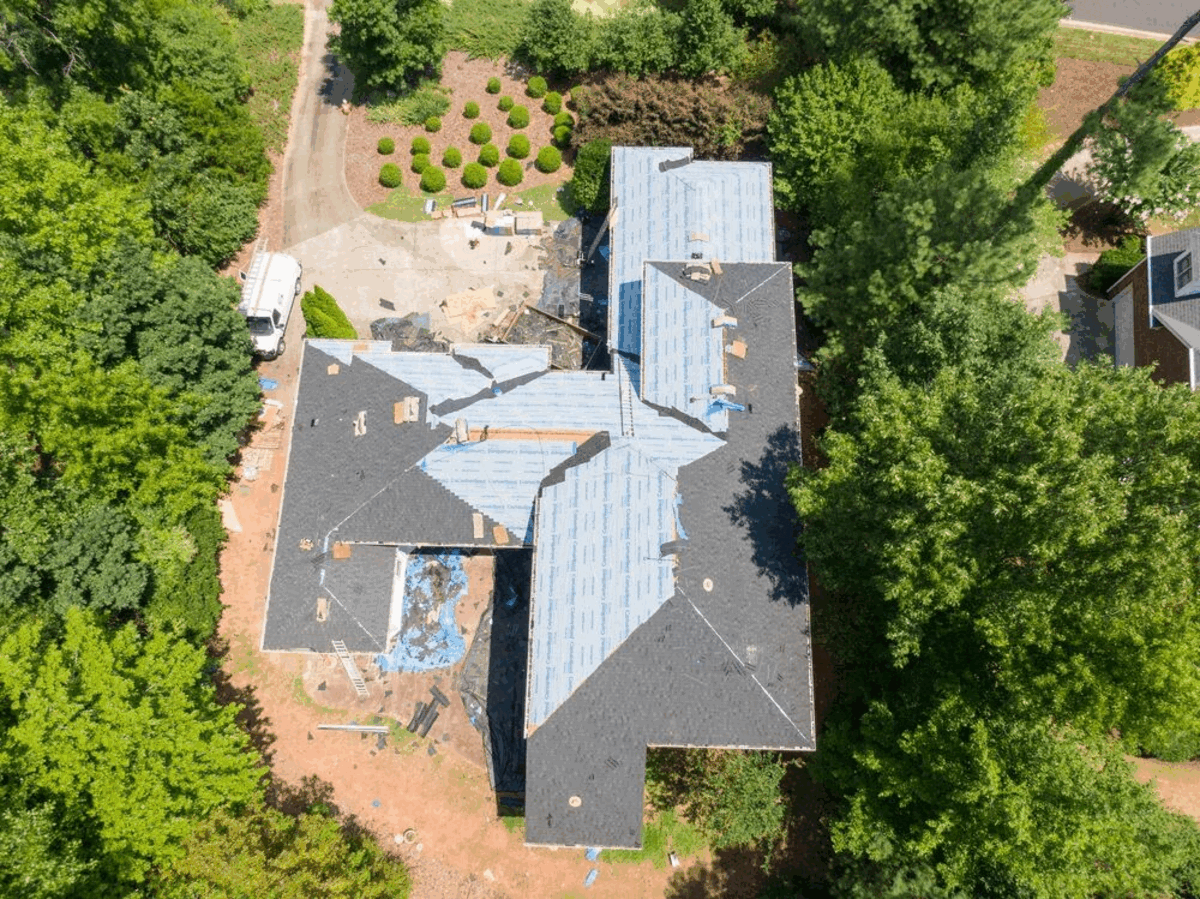
Most asphalt shingle roofs in the Charlotte area last between 18 and 22 years, which is shorter than the 25 to 30 year lifespan often quoted on manufacturer packaging. The gap comes down to climate. Charlotte's combination of humidity, intense summer UV, and regular severe thunderstorms wears down shingles faster than the milder, drier conditions those manufacturer estimates are usually based on.
That said, the real answer depends heavily on the material, the quality of the original installation, and a handful of conditions specific to each home. Here is how that breaks down.
Average Lifespan by Shingle Type
- 3-tab asphalt shingles: 15 to 18 years in this climate. The most affordable option, but also the least durable against heat and storms.
- Architectural (dimensional) asphalt shingles: 20 to 25 years. Thicker and more wind resistant than 3-tab, which matters given how often this region sees straight line winds and hail.
Architectural asphalt shingles are what we install on the large majority of homes in the Charlotte area, largely because they offer the best balance of cost and durability against this specific climate.
Why Charlotte's Climate Changes the Math
A roof in Charlotte deals with a wider range of stress than the same roof might face elsewhere in the country. Summers bring long stretches of intense UV exposure that dry out and break down asphalt shingles from the top down. Those same summer months bring fast moving thunderstorms capable of producing hail and straight line winds with very little warning. Winters are milder than much of the country, but the freeze thaw cycles that do occur work their way into small cracks and flashing gaps, widening them over time. Add in humidity for most of the year, which encourages algae and moss growth on north facing slopes, and it becomes clear why a shingle rated for 25 years often does not reach that number here.
What Actually Shortens a Roof's Lifespan
A few specific issues tend to cut years off a roof's expected lifespan, regardless of the material used:
- Poor attic ventilation, which traps heat and moisture against the underside of the decking and shortens shingle life from below
- Improper installation, particularly around flashing, valleys, and nail placement, which creates weak points long before the shingles themselves would normally fail
- Unaddressed storm damage, where a homeowner assumes a few missing shingles are cosmetic and does not realize water has already reached the decking
- Algae and moss buildup, especially on shaded, north facing sections of roof, which holds moisture against the shingle surface
Most of these are preventable with a periodic inspection rather than waiting for a visible leak.
What This Means If You Are Buying, Selling, or Just Planning Ahead
Roof age is one of the first things that comes up in a home sale in this market, and for good reason. A roof nearing the upper end of its expected lifespan can affect financing, insurance eligibility, and negotiating leverage on either side of a sale. If you are buying a home with an older roof, a professional inspection before closing gives a much clearer picture than guessing based on the roof's visible condition from the ground.
If you already own the home and the roof is approaching 15 to 18 years old but is not showing obvious damage, it is worth getting an opinion before assuming replacement is the only option. A Roof Maxx treatment can restore flexibility to aging shingles and extend usable life by several years in cases where a full roof replacement is not yet necessary. And if a recent storm is part of what prompted the question, it is worth getting that checked separately through our storm damage and restoration team rather than assuming age alone is the issue.

Comments